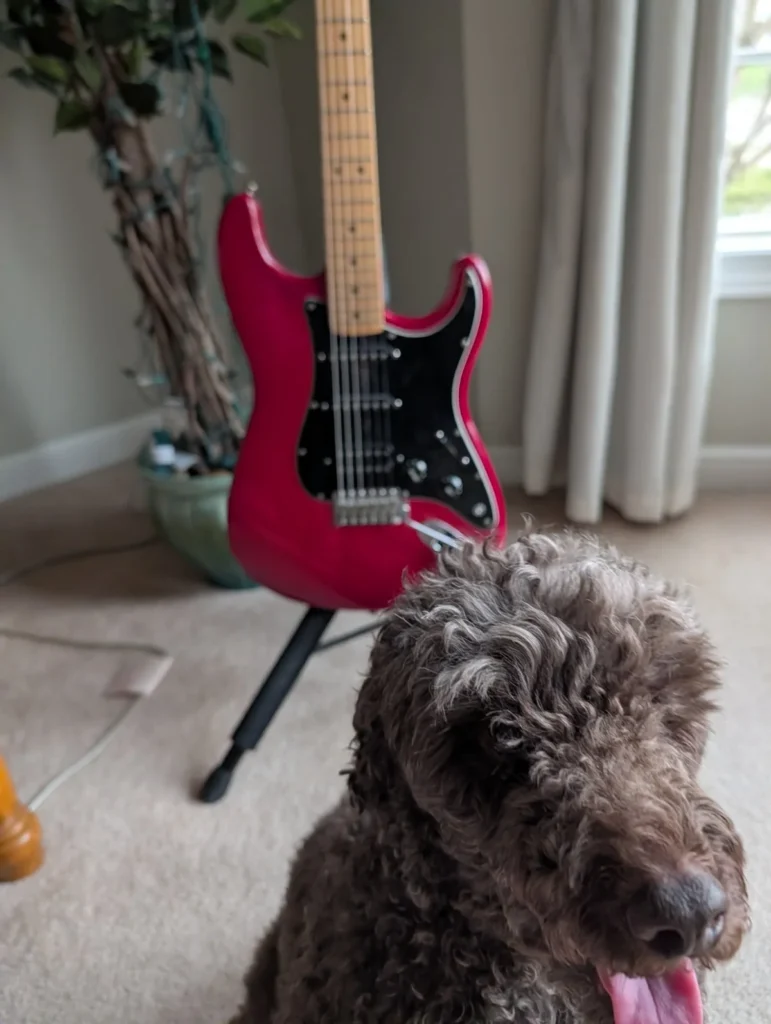

My dog was sleeping on the couch next to me. I was running a Kirk Hammett Black Album rig at full metal volume, squeezing every drop of gain from my 1995 Fender Stratocaster.
They never moved.
That moment is the Positive Grid Spark NEO review in a single sentence. But there’s a lot more to unpack — including where it genuinely impresses, where it falls short, and one honest truth about the Spark AI feature that Positive Grid’s marketing doesn’t mention.
I played this thing every day for a week, about an hour each session. Here’s what I found.
What Is the Positive Grid Spark NEO?
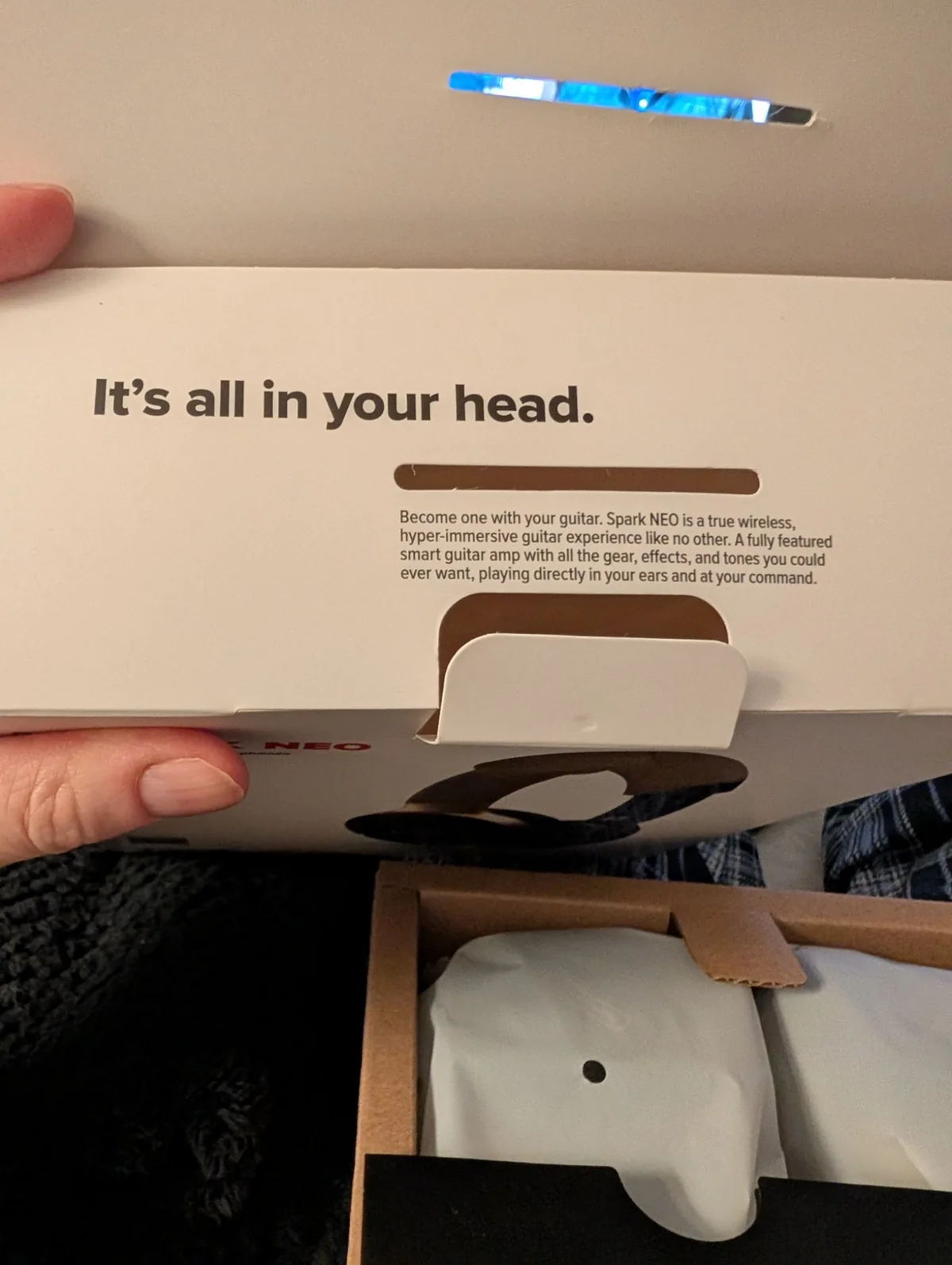
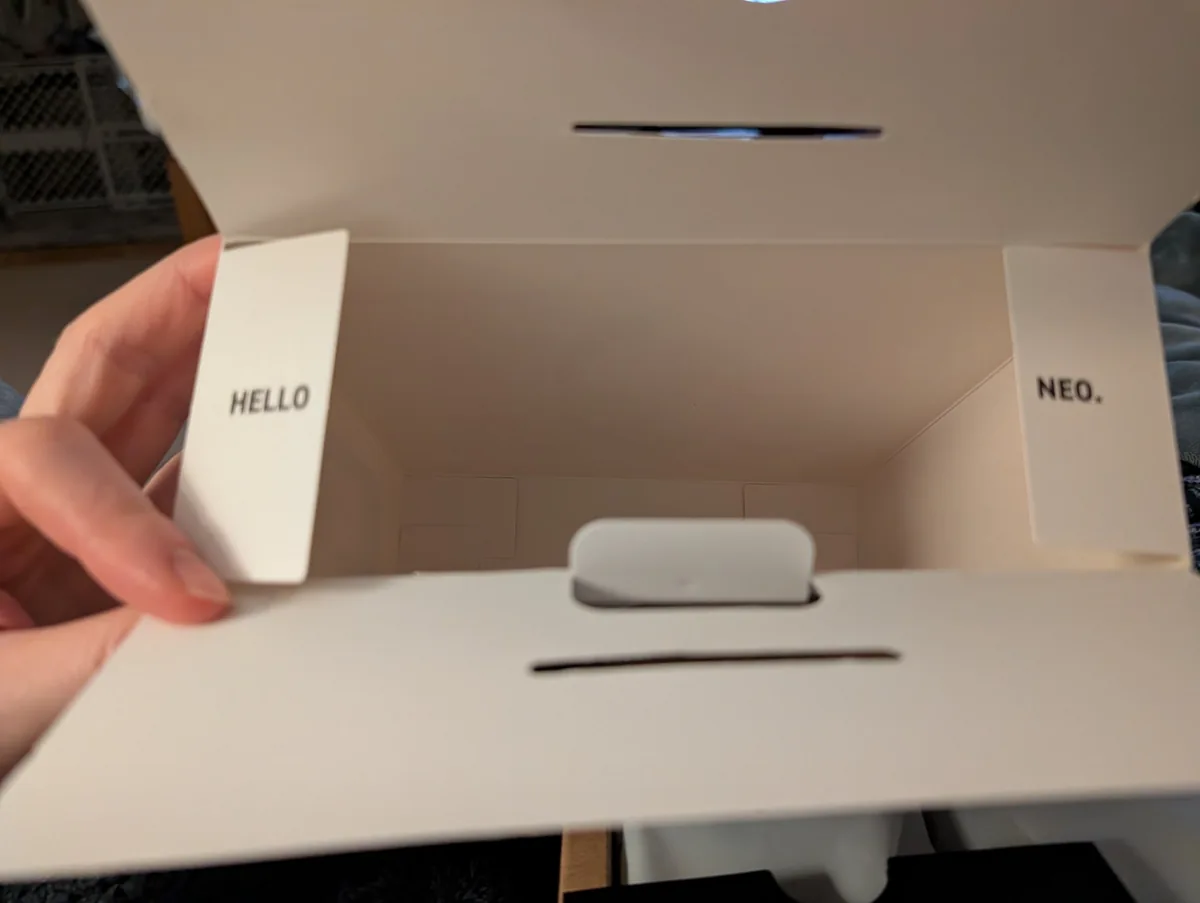
The Spark NEO is a wireless headphone amplifier system built specifically for guitarists. It’s not a traditional amp. It’s not a pair of generic headphones with a guitar input awkwardly bolted on. It’s a purpose-built rig — custom-designed headphones paired with a 2.4GHz proprietary wireless transmitter — that runs the same tone engine powering Positive Grid’s acclaimed Spark amp lineup.
The package includes the headphones, the transmitter, a USB-C cable, and a get-started card. That’s it. Everything else lives in the free Spark app on your phone.
Retail price: $199 direct from Positive Grid. I caught it on sale through Amazon and paid $219 — so check the Positive Grid site directly before assuming Amazon has the better deal.
Who Should Buy This?
Before I get into specifics, let me be clear about who this is for. The Spark NEO is not for gigging musicians. It’s not for recording. Positive Grid is upfront about this — there’s no USB audio output, no line out, and it’s not designed for stage use.
What it is designed for: anyone who wants to play guitar, at any volume, at any hour, without bothering a single other living thing in the room. If you’ve got roommates, a partner, kids, dogs, or just neighbors who’ve had enough of your Sabbath riff attempts at 11pm — this is built for you.
Setup: Embarrassingly Simple
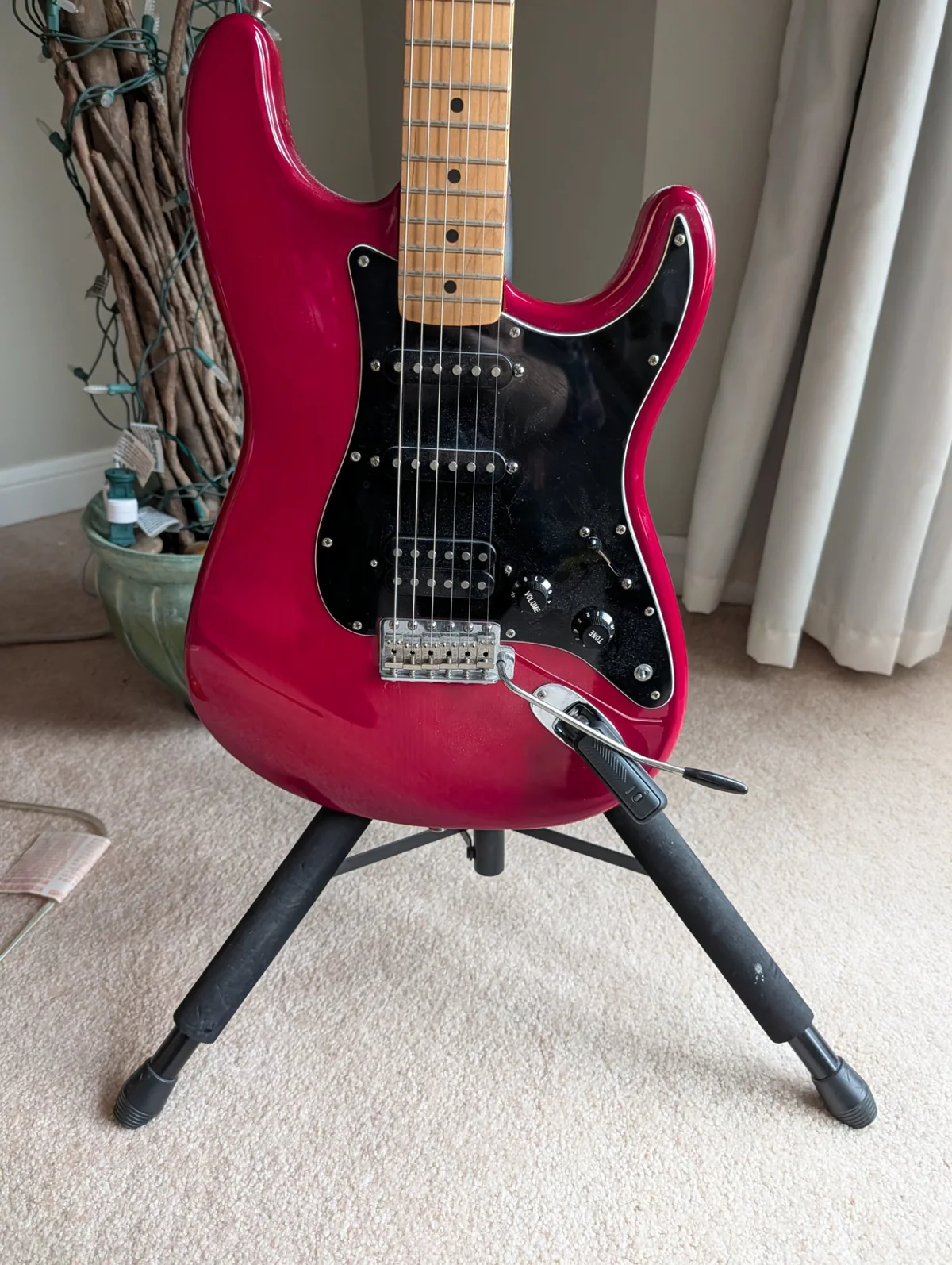
Plug the transmitter into your guitar’s output jack. Power on the headphones. Open the Spark app. Done.
The 2.4GHz wireless connection locks in automatically. No pairing nightmare, no Bluetooth wrestling match. I had sound coming through within about 30 seconds the first time I tried it.
The transmitter itself is tiny — about the size of a USB drive — and has a hinged plug designed to accommodate different guitar body shapes. It fit my Strat without any issues.
Sound Quality: The Part That Actually Matters
I’ve owned a 1995 American Fender Stratocaster for years. Single-coil pickups. Beautiful guitar. Also notoriously noisy — the 60-cycle hum on vintage single coils is real, and it gets worse with high-gain amp settings.
Here’s what stopped me in my tracks on day one: the noise gate killed it completely.
I loaded a Randy Rhoads rig — swapped in an overdrive pedal I’d read about on a gear site to match his tone more closely — cranked the gain, and expected the usual wall of hum that comes with putting a vintage Strat through a high-gain setup. Instead? Pure signal. The noise gate in the Spark app’s signal chain handled it cleanly without chewing into my sustain or dulling the attack.
For anyone with a vintage American guitar, this alone justifies serious consideration.
The three rigs I tested most heavily:
Randy Rhoads — nailed it with the right overdrive in the chain. The clarity on fast runs was genuinely impressive. Single coils through this rig had bite without becoming harsh.
Metallica Black Album — Kirk Hammett — this is where I sat on my couch, my dog sleeping beside me, and just played. The chunky rhythm tone, the palm-muted crunch, the single-note lead clarity. All there. At zero volume to anyone else in the room.
Ghost — the layered, almost-orchestral quality of their guitar tones actually translated well through the headphones. The stereo imaging helped here — the NEO’s custom 40mm ABF drivers create a wider soundstage than I expected from a closed-back pair of headphones.
The Latency Question
Positive Grid specs the wireless transmitter at 3.8ms latency. That sounds impressive on paper, but specs are one thing and actual playing feel is another.
I played fast — Rhoads-style runs, palm-muted Metallica rhythms, single-note Ghost leads — and noticed exactly zero latency. Nothing. The note I played was the note I heard. For reference, the human threshold for perceiving audio delay is somewhere around 10-20ms. At 3.8ms, you’re not going to feel it.
This was the biggest question I had going in. It’s completely answered.
Headphone Comfort: An Hour a Day, All Week
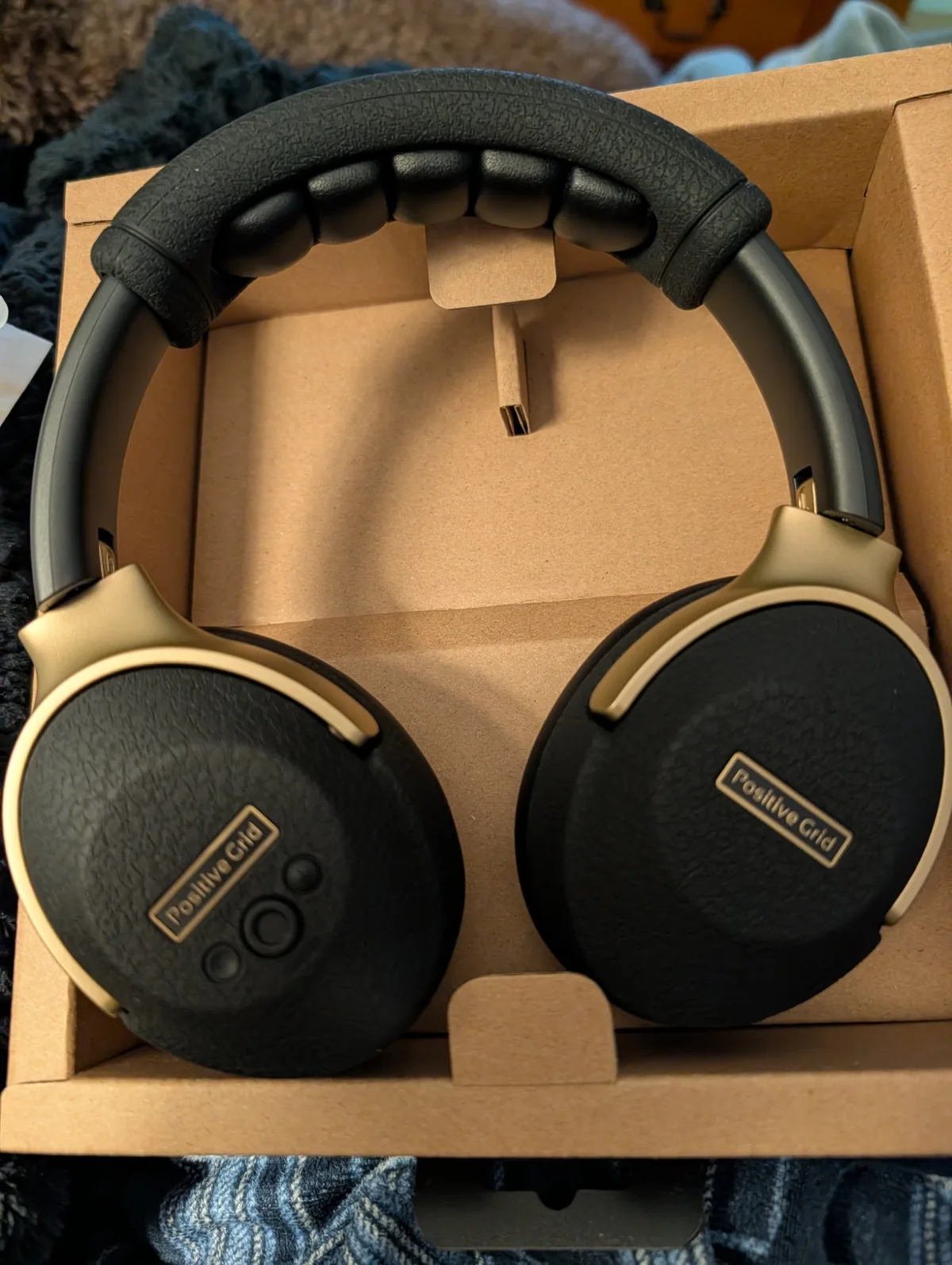
Over-ear headphones under guitar-playing conditions are a different challenge than regular listening. You’ve got a guitar strap pulling the headphones slightly. You’re moving your head. You’re wearing them for an extended session.
I played roughly an hour each day this week. The NEO’s ear cushions are soft, the clamping force is firm without being tight, and the passive noise isolation does a legitimate job of keeping outside sound out. I never wanted to take them off mid-session, which for me is the actual test.
One note: they weigh 366 grams, which is on the heavier side for over-ear headphones. After an hour I didn’t notice, but I can see how sensitive players might feel it in longer sessions.
The Spark App: Genuinely Great, With One Honest Caveat
The Spark app is where the NEO’s value multiplies. Access to 33 amp models, 43 effects, and over 100,000 community-shared presets through ToneCloud. Auto Chords. Backing tracks. A built-in tuner. Voice control. A metronome.
For the NEO specifically, the app unlocks four customizable hardware presets you can recall directly from the headphones — so you can switch between your clean, crunch, lead, and metal rigs without touching your phone.
Here’s the honest caveat on Spark AI: The feature lets you type a prompt — “glassy clean,” “crunchy blues,” “70s hard rock” — and generates four tones for you to try. It’s genuinely fun to play with. But when you’re chasing a specific artist rig? In my experience, the community presets on ToneCloud are better.
The Rhoads rig I ended up using, the Hammett rig, the Ghost tone — all pulled from ToneCloud, not generated by Spark AI. The AI is a solid starting point and a great exploration tool, but community presets built by players who actually know those tones are consistently more accurate.
My workflow recommendation: use Spark AI when you want to discover something new. Go straight to ToneCloud when you’re chasing something specific.
Worth noting: Smart Jam — one of the app’s headline features on other Spark models — is not available on the NEO. The feature works by listening to your playing through the amp’s speakers, and since the NEO is a headphone amp that doesn’t project sound into the room, it can’t function. The looper is also absent. If those features are important to you, the Spark 2 or Spark Mini are the better options.
The Specs, All in One Place
| Spec | Detail |
|---|---|
| Price | $199 (Positive Grid direct) |
| Drivers | 40mm ABF (Advanced Bio Fiber) diaphragm |
| Frequency Range | 20Hz – 20kHz |
| Impedance | 32 ohms |
| Sensitivity | 100dB SPL @ 1kHz |
| Wireless | Proprietary 2.4GHz |
| Latency | 3.8ms |
| Wireless Range | 5 meters (line of sight) |
| Bluetooth | 5.0 (for audio streaming) |
| Battery — Headphones | 6 hrs (guitar), 8 hrs (audio only) |
| Battery — Transmitter | 13 hours |
| Charge Time | 3.5 hrs (headphones), 2 hrs (transmitter), both USB-C |
| Weight | 366g headphones, 38.6g transmitter |
| Onboard Presets | 4 customizable hardware presets |
| Amp Models | 33 |
| Effects | 43 (Noise Gate, Compressor/Wah, Distortion, Modulation/EQ, Delay, Reverb) |
| Compatible Instruments | Electric, acoustic-electric, bass |
| In the Box | Headphones, transmitter, USB-C cable, get-started card |
How It Compares to the Competition
The Spark NEO at $199 sits in an increasingly crowded market for headphone amps.
Boss Waza-Air ($349): The original wireless guitar headphone amp. It has a built-in gyroscope that creates an “amp in the room” effect — genuinely impressive tech. But at nearly $150 more, the premium is hard to justify now that the NEO exists. The Waza-Air is the benchmark the NEO was built to undercut.
Fender Mustang Micro Plus ($129): Wired only. Great value, but you’re tethered to your guitar. Fender’s ecosystem is excellent and the tones are solid — but no wireless changes the entire experience.
Boss Katana:Go ($99): Also wired. Excellent at its price point. Good for players who don’t need wireless and want to spend less.
Spark NEO Core ($159): Positive Grid’s own wired version. Same drivers, same app access, same amp and effects library — just no wireless transmitter. If you’re not bothered about the cable, this saves you $40.
For the specific experience of playing completely untethered — wandering around, sitting on the couch, moving freely — the NEO at $199 is the best value option on the market right now.
What I’d Change
No review from this site pulls punches, so here’s what’s genuinely missing:
No looper. For a practice tool at this price, the absence stings. Loopers are how a lot of players work through ideas and practice riffs. It’s a real limitation.
No Smart Jam. Understood why technically — but it’s still a loss compared to other Spark models.
Spark AI accuracy varies. When you’re chasing a specific artist’s rig, go to ToneCloud first. The AI is better for exploration than precision.
No carry case in the box. At $199, a bag should be included. It isn’t. MusicRadar noted the same thing. Third-party cases exist, but it’s a miss.
Amazon pricing is inconsistent. The retail price is $199 direct. Watch the Amazon listing carefully — it fluctuates. I caught a sale and paid $219, which was actually more than direct. Check Positive Grid’s site first.
Final Verdict
I went into this expecting a novelty. A clever gadget that would be fun for a week and then collect dust.
Instead, I played guitar for an hour every day this week and I’m already thinking about buying a second guitar specifically to use with it.
The Spark NEO does something that no other piece of gear in my collection does: it removes every single barrier between me and playing. No amp to turn on. No volume to manage. No neighbor to disturb, no dog to wake up, no family member to check in with before cranking a metal rig. You pick up the guitar, plug in the transmitter, and you’re playing.
For anyone with a vintage guitar dealing with single-coil noise issues — the noise gate alone is worth the price of admission. For anyone who’s ever wanted to play heavy metal from their couch at midnight: this is your setup.
Rating: 9/10
One point off for the absent looper and the missing case. Everything else is exactly what it promises to be.
Where to Buy
- Amazon ← watch for sales, price fluctuates
Also worth knowing: the Spark NEO Core ($159) is the wired version if you don’t need wireless and want to save $40.
Disclosure: Some links in this article are affiliate links. If you purchase through these links, Crained earns a commission at no additional cost to you. I personally purchased this product at full (sale) price and was not compensated by Positive Grid. See our full disclosure policy for details.
FAQ
Does the Positive Grid Spark NEO work with any guitar? Yes — electric, acoustic-electric, and bass. The transmitter’s hinged plug fits most standard guitar inputs. Some recessed inputs or custom body shapes may need an adapter.
Can I use the Spark NEO without the app? Yes. Four hardware presets are stored directly on the headphones and accessible without your phone. For the full library of 33 amps and 43 effects, you’ll need the Spark app.
Does the Spark NEO have a looper? No. The looper is not available on the NEO. If you rely on a looper for practice, look at the Spark 2 or Spark Mini instead.
Is the Spark NEO good for vintage guitars with hum issues? In my experience with a 1995 Fender Stratocaster, yes — the noise gate handled vintage single-coil hum extremely well without killing sustain.
Can I use the Spark NEO as regular headphones? Yes. Bluetooth 5.0 streaming is built in — you can use them for music, podcasts, or anything else when you’re not playing guitar.
What’s the battery life on the Spark NEO? Up to 6 hours with guitar playing, 8 hours for audio playback only. The transmitter lasts up to 13 hours. Both charge via USB-C.