
My partner has celiac disease. Not a sensitivity, not a preference — celiac. Cross-contamination matters. Shared fryers matter. A waiter shrugging and saying “I think it’s fine” is not fine.
We spent 10 days in France in December, splitting time between Paris, Strasbourg, and Colmar for the Christmas markets. She didn’t get sick once. Not a single reaction across three cities, dozens of meals, and 10 days of navigating a country famous for bread, pastries, and flour-thickened sauces.
Here’s how we did it — the restaurants we trusted, the tools we used to find them, and the honest truth about what you can and can’t eat at the Christmas markets.
This article is part of our France Christmas Markets series. For the full trip itinerary, check out 10 Days in France for Christmas Markets: Our Complete Itinerary.
The Reality: France Is Better Than You Think (With the Right Preparation)
If you’re celiac and you’re looking at France on a map, your first instinct might be dread. This is the country that invented the baguette. Croissants. Pain au chocolat. Sauces thickened with roux. It feels like the entire culinary identity is built on the one thing you can’t eat.
Here’s the surprise: France — and Paris especially — has one of the best dedicated gluten-free restaurant scenes in Europe. Not restaurants that “have a gluten-free option.” Restaurants where every single thing on the menu is gluten-free. Dedicated bakeries turning out croissants, baguettes, and éclairs that would fool anyone.
The Alsace region (Strasbourg and Colmar) is tougher. There are fewer dedicated options. But with the right research and the right tools, we ate well every single day without a reaction.
The key word is preparation. We didn’t wing it. Here’s the system that worked.
Our Research & Planning System
We used a layered approach to find safe restaurants, and I’d recommend anyone with celiac do the same before traveling in France.
Before the Trip
Gluten-free travel blogs were our starting point. We used Gluten Free Alchemist, My GF Guide, and Jess and Martin’s Gluten Free Travel Guide to build an initial list of dedicated GF restaurants and bakeries in each city. These bloggers are celiacs themselves, and their recommendations are tested with that level of seriousness.
We also used Claude (Anthropic’s AI) for research. This might sound unusual for a travel article, but it was genuinely helpful. We asked Claude to pull together all the gluten-free restaurants in Strasbourg and Colmar, and then for Paris, we specifically asked for GF options near our hotel and near the landmarks we were visiting. Instead of manually cross-referencing a dozen blog posts, we had a structured shortlist organized by city and location in a fraction of the time. It’s not a replacement for the celiac-specific blogs — but as a research accelerator, it saved us hours.
The FindMeGlutenFree app gave us a user-review layer on top of the blog research. Celiac travelers rate restaurants specifically for cross-contamination safety, which is different from a general Google review.
During the Trip
Google Fi for international data was non-negotiable. There were multiple times a restaurant we’d planned on was packed, and having cell service meant we could immediately search for alternatives, check reviews, and navigate to a backup option. Without real-time data, we would have been stuck wandering around hungry — and when you’re celiac, “just grab something” isn’t an option.
Google Maps reviews filtered for “gluten free” or “celiac” became our real-time gut check. Before walking into any restaurant that wasn’t on our pre-researched list, we’d search the reviews for those keywords. If multiple celiacs had eaten there safely, we’d give it a try. If there were no mentions, we’d stick to our vetted list.
Google Translate was essential for menus and communication. My partner knew a few key French phrases for communicating her celiac needs, and honestly, nearly every restaurant we went to had staff who spoke English. But for the times they didn’t — or when we needed to read a menu without English translations — Google Translate’s camera feature was a lifesaver. Point your phone at a menu, and you’ve got an instant translation. We also used it to communicate directly with servers when the English wasn’t quite enough to explain cross-contamination concerns. <!– [PHOTO: Phone showing FindMeGlutenFree app or Google Maps search, or the restaurant research process] –>
The Honest Truth About Christmas Market Food Stalls
Let’s get this out of the way, because it’s the question every celiac traveler has about a Christmas market trip: Can you eat the food at the market stalls?
Mostly, no.
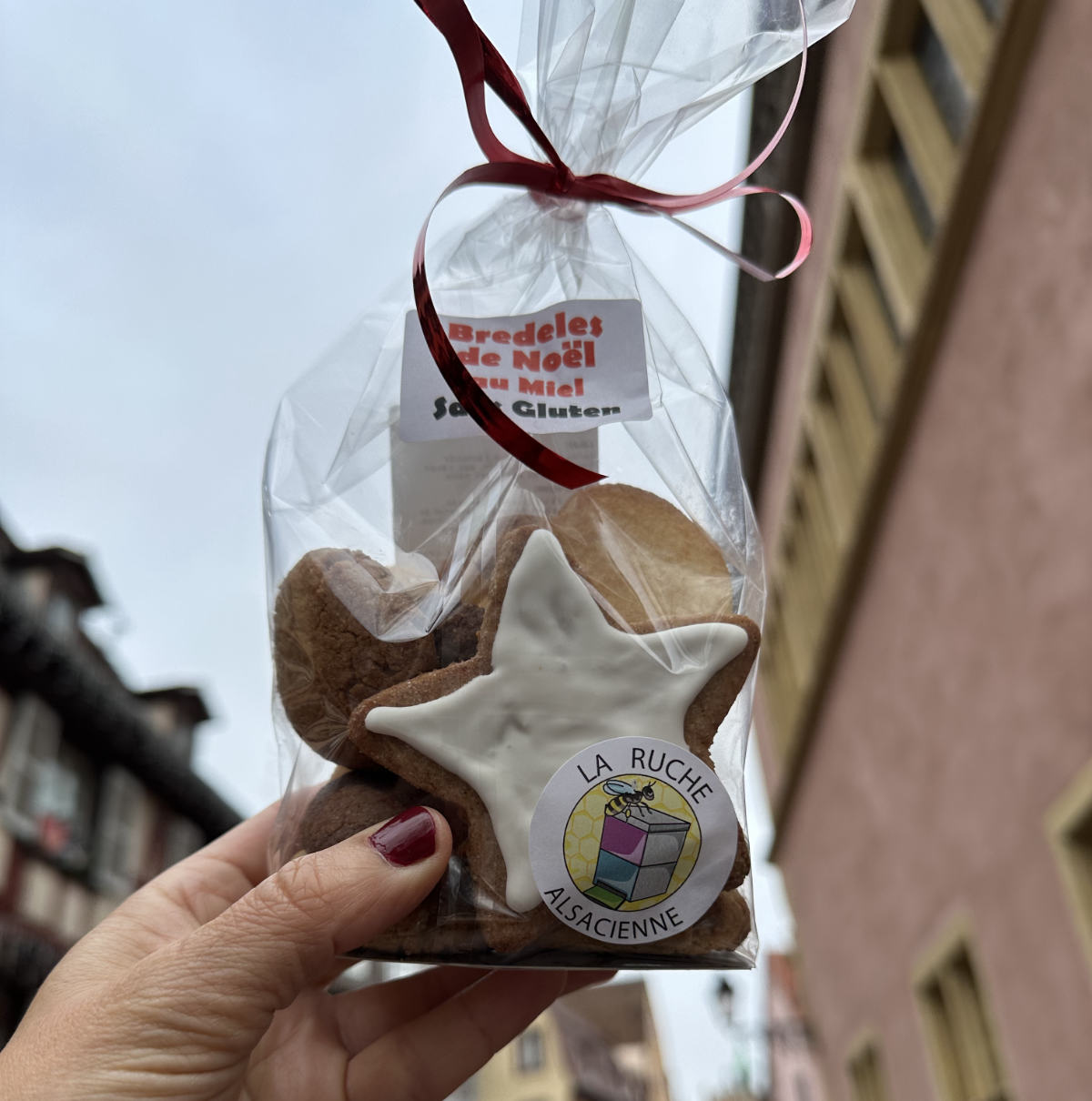
The vast majority of Christmas market food — tarte flambée, pretzels, crêpes, gingerbread, bredele cookies, waffles — is made with wheat flour in open-air stalls with no separation between gluten and gluten-free prep. There’s flour dust in the air, shared surfaces, shared utensils. For someone with celiac, it’s not worth the risk.
What was safe at the markets:
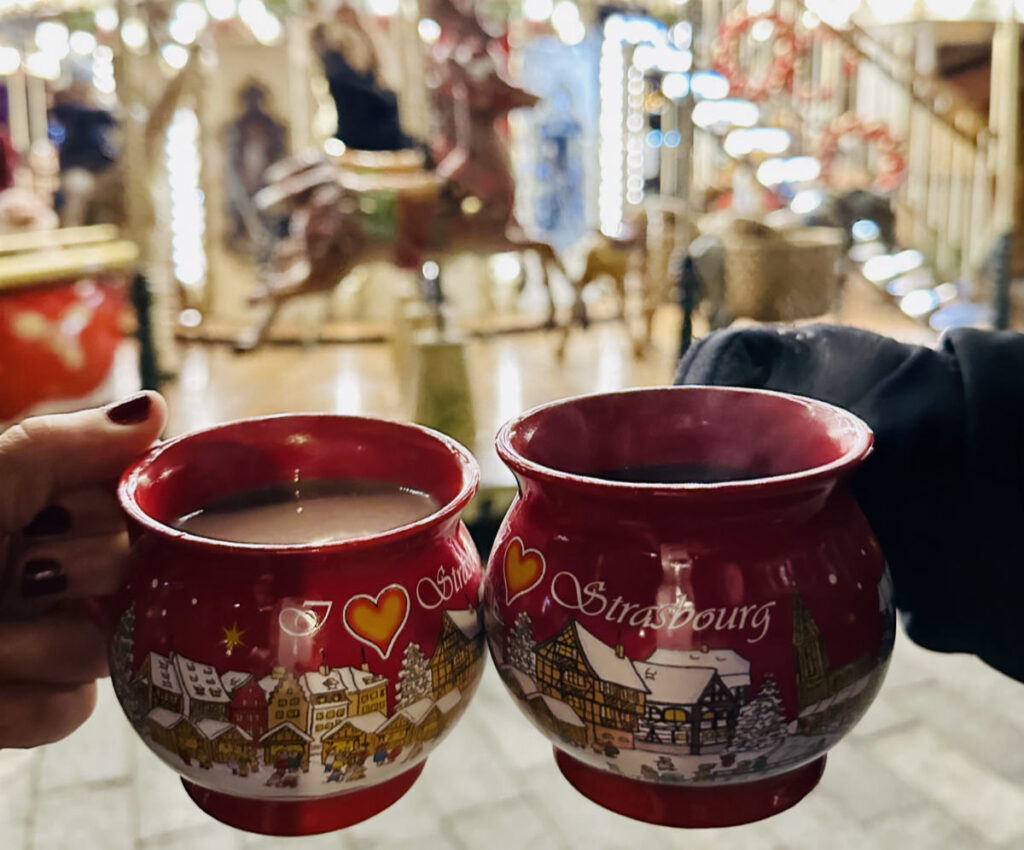
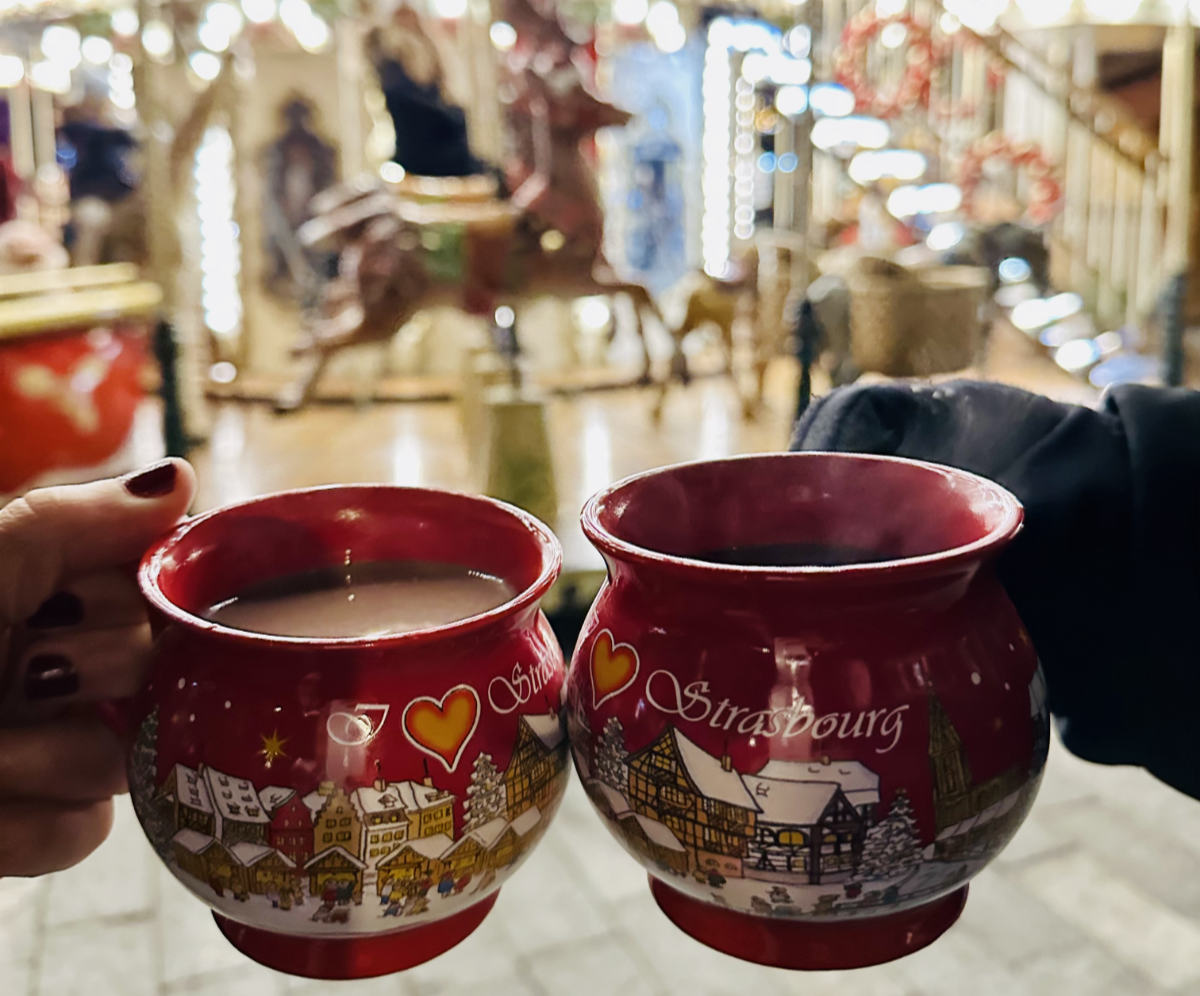
- Drinks. Vin chaud (mulled wine) and hot cider were fine. My partner drank these at stalls in both Strasbourg and Colmar without issue. These are naturally gluten-free — just wine or cider heated with spices.
- Some sausages. Certain grilled sausage stalls were cooking on dedicated grills without breaded items. But this required asking questions and using judgment — not every sausage stall was safe.
- Roasted chestnuts. We never actually bought them, but chestnuts are naturally gluten-free and roasted in their own shells — they should be safe at most stalls. In hindsight, we should have grabbed some.
What this means for planning: Don’t expect to graze your way through the Christmas markets like everyone else. Instead, eat a solid meal at a safe restaurant before hitting the markets, enjoy the vin chaud and the atmosphere, and plan your next real meal at another vetted spot. It’s a different experience, but it doesn’t ruin the trip. The markets are magical even if you’re just holding a mug of mulled wine and taking in the lights.
Our strategy: We’d eat breakfast or a late lunch at a dedicated GF restaurant, go to the markets for drinks and atmosphere, then have dinner at another researched spot. It worked every day of the trip. <!– [PHOTO: Vin chaud at a Christmas market stall — shows you can still enjoy the market experience] –>
Paris: The Best Gluten-Free City You’ve Never Considered
Paris has more dedicated gluten-free restaurants and bakeries than almost any city in Europe. This isn’t a situation where you’re hunting for scraps — you’re choosing between multiple excellent options in most neighborhoods.
Our Top 3 Paris Restaurants for Celiac Travelers
1. Tasca — Our Favorite Restaurant of the Entire Trip
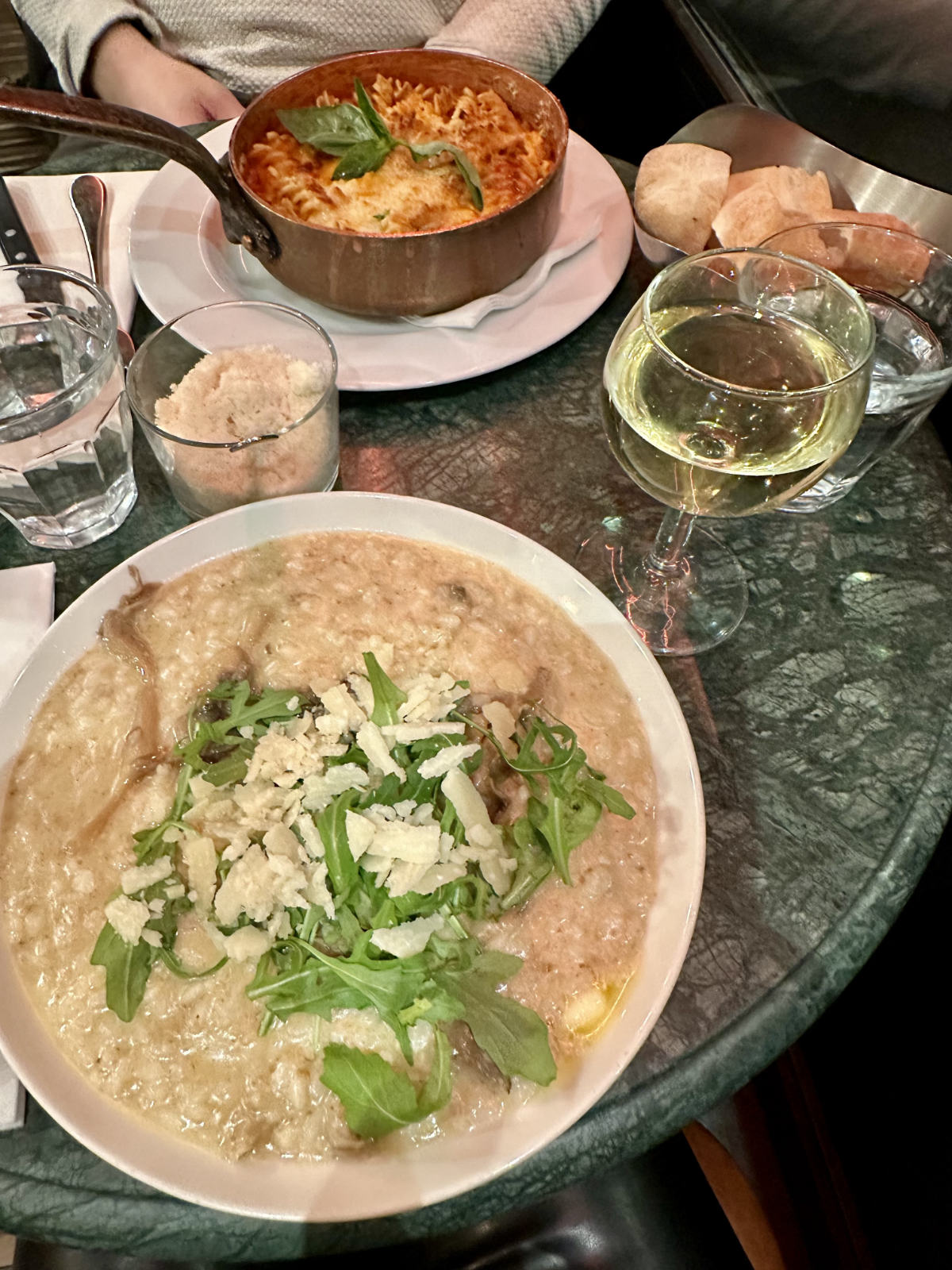
What: 100% gluten-free Italian restaurant near the Eiffel Tower Address: 46 Av. de Suffren, 75015 Paris We ate here: Twice. That should tell you everything.
Tasca is entirely gluten-free — the whole menu, no exceptions. It’s run by Italian brothers, and the food is legitimately excellent regardless of the dietary angle. We went on our first night in Paris and liked it so much we went back later in the trip.
We had pasta, pizza, and dessert across our two visits, and everything was amazing. The pizza dough was good enough that you wouldn’t know it was gluten-free, and the pasta held up just as well. Dessert was the kind of thing where you’d happily order it even if you had no dietary restrictions.
Celiac safety: Dedicated gluten-free kitchen. No wheat on the premises. This is as safe as it gets.
Tip: We made a reservation, but since we ate on the early side, we probably could have walked in. If you’re going during peak dinner hours, book ahead.
2. Little Nonna — The Best GF Italian You’ll Find Anywhere
What: 100% gluten-free Italian Address: 17th arrondissement, Paris We ate here: Once, wish it had been twice.
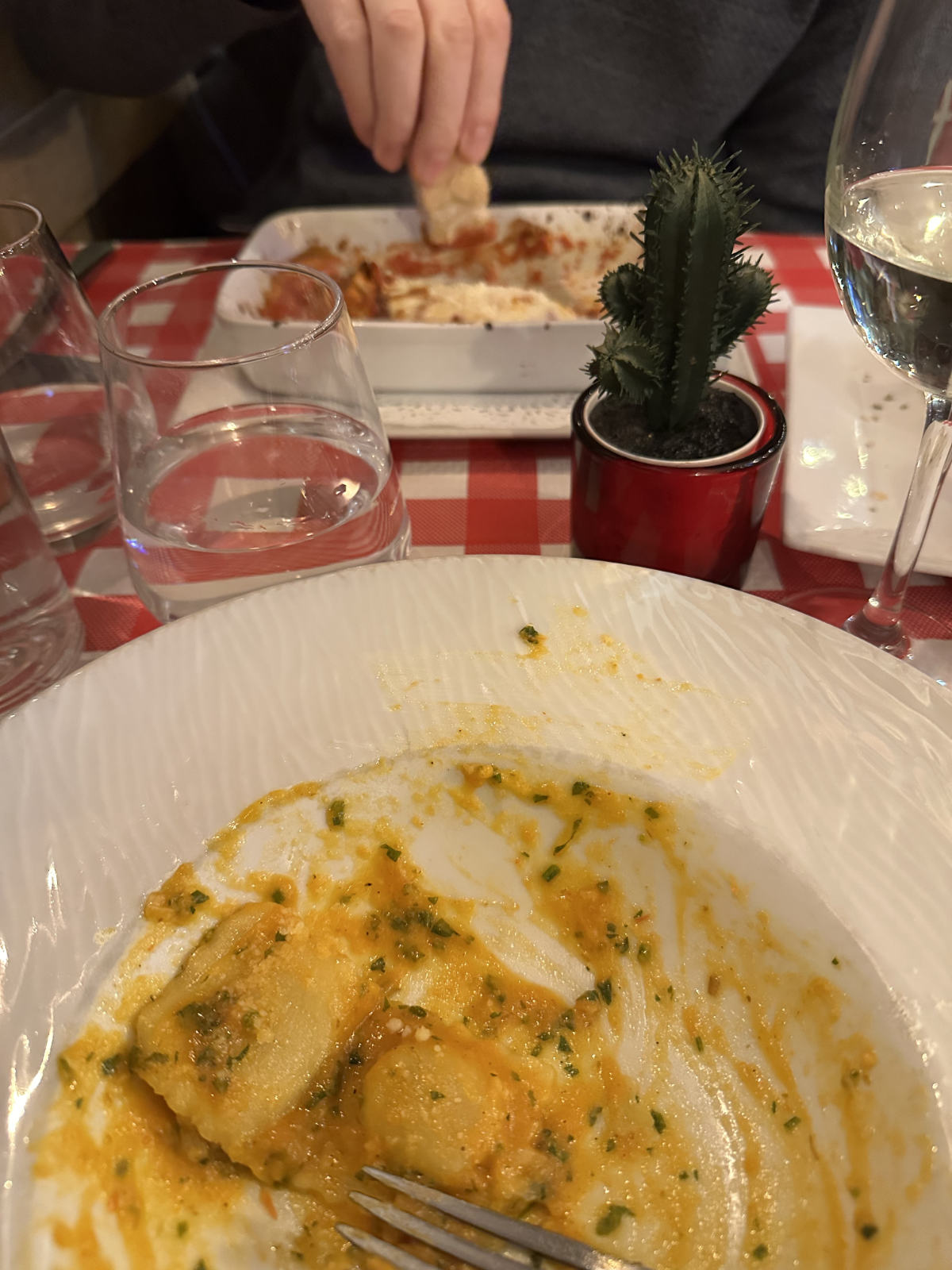
Little Nonna is completely gluten-free with zero wheat on premises. The chef makes it clear from the moment you walk in. Pizzas are made from a rice, corn, and buckwheat base. They also serve gluten-free focaccia, which is basically a unicorn in the restaurant world.
I had the lasagna, my partner had the penne — both were solid. It’s a slightly different vibe from Tasca, but the same peace of mind knowing that everything on the menu is safe.
Celiac safety: Fully dedicated GF facility. The chef is reportedly celiac himself.
3. Thaisil — Proof That GF Doesn’t Mean Boring
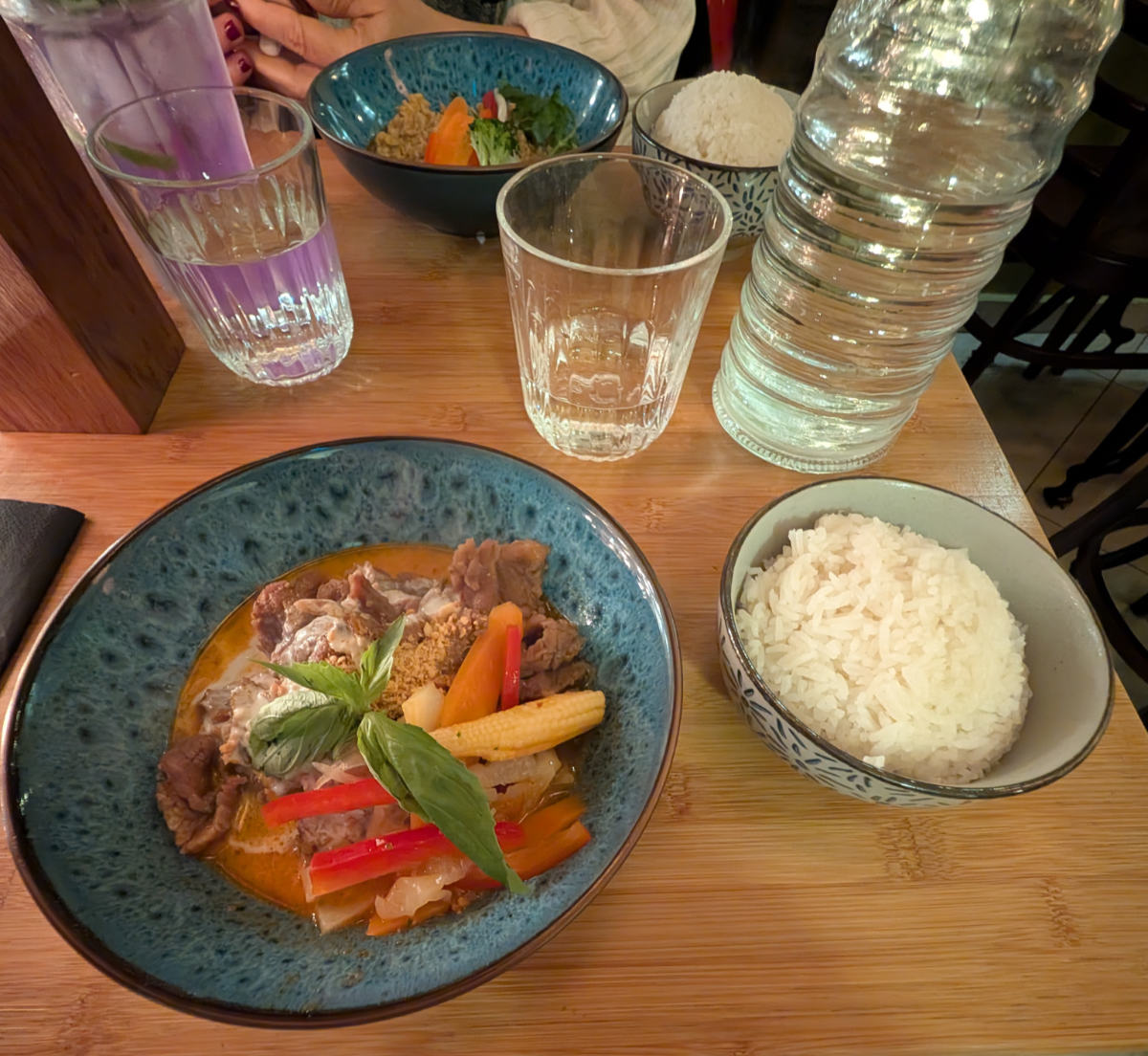
What: 100% gluten-free Thai-Cambodian restaurant Address: Paris (near Bonne-Nouvelle neighborhood) We ate here: Dinner on our last full night in Paris.
Thaisil is entirely gluten-free, and the food is genuinely great — not “great for gluten-free,” just great. Traditional Thai soups, curries, and noodle dishes, all in a cozy, colorful space that feels like a neighborhood gem rather than a dietary-restriction restaurant.
We liked it so much that after dinner, we started walking back toward our hotel near the Eiffel Tower just to take in the neighborhood. The area around the restaurant is charming at night — worth the stroll. We made it a decent way before the rain started and we called an Uber back, but even that felt like part of the adventure.
Celiac safety: 100% dedicated gluten-free. Every item on the menu is safe.
Tip: It’s not in the main tourist areas, but that’s part of the charm. Worth the trip.
Other Paris GF Spots on Our List
We had a long researched list for Paris. Here are the other spots we ate at or had planned:
| Restaurant | Type | GF Status | Our Take |
|---|---|---|---|
| Noglu | Bakery/Café/Restaurant | 100% dedicated GF | We went twice for breakfast — coffee and food both times. Amazing. The pastries and bread are the real deal, and the coffee is excellent. One of the most reliable GF spots in Paris. |
| Thaisil | Thai-Cambodian | 100% dedicated GF | Amazing. Really great food in a charming location. We started walking home afterward just to enjoy the neighborhood (until the rain hit). Highly recommend. |
⚠️ Helmut Newcake — Permanently Closed. You’ll see Helmut Newcake recommended in many gluten-free Paris guides. It was a beloved 100% GF bakery. Unfortunately, it has permanently closed. If you’re reading a guide that still lists it, that guide is out of date.
Paris tip: The dedicated GF bakeries (especially Noglu) are life-changing for celiac travelers. Stock up in the morning — grab a baguette, some pastries, maybe a sandwich — and you’ve got safe snacks for the rest of the day. This is especially useful for museum days when you don’t want to hunt for a restaurant between the Louvre and Montmartre.
Grocery Stores: A Backup Option We Didn’t Need
We actually never set foot in a French grocery store during the trip — between the dedicated restaurants and the bakery runs, we always had food covered. But it’s worth knowing the option exists.
One advantage of traveling in the EU: allergen labeling laws are strict. Gluten must be clearly identified and bolded in ingredient lists on all packaged food. Look for “gluten,” “blé” (wheat), “orge” (barley), or “seigle” (rye). Products labeled “sans gluten” are gluten-free.
French grocery chains like Monoprix, Franprix, and Carrefour typically have a dedicated gluten-free section. If you’re staying somewhere with a kitchen, or just want backup snacks, it’s a solid option.
Strasbourg: Fewer Options, But the Right Ones Exist
Strasbourg is not Paris. The dedicated GF scene is smaller, and the city’s signature dish — tarte flambée — is traditionally made with wheat dough. But we ate well here, and my partner had zero issues.
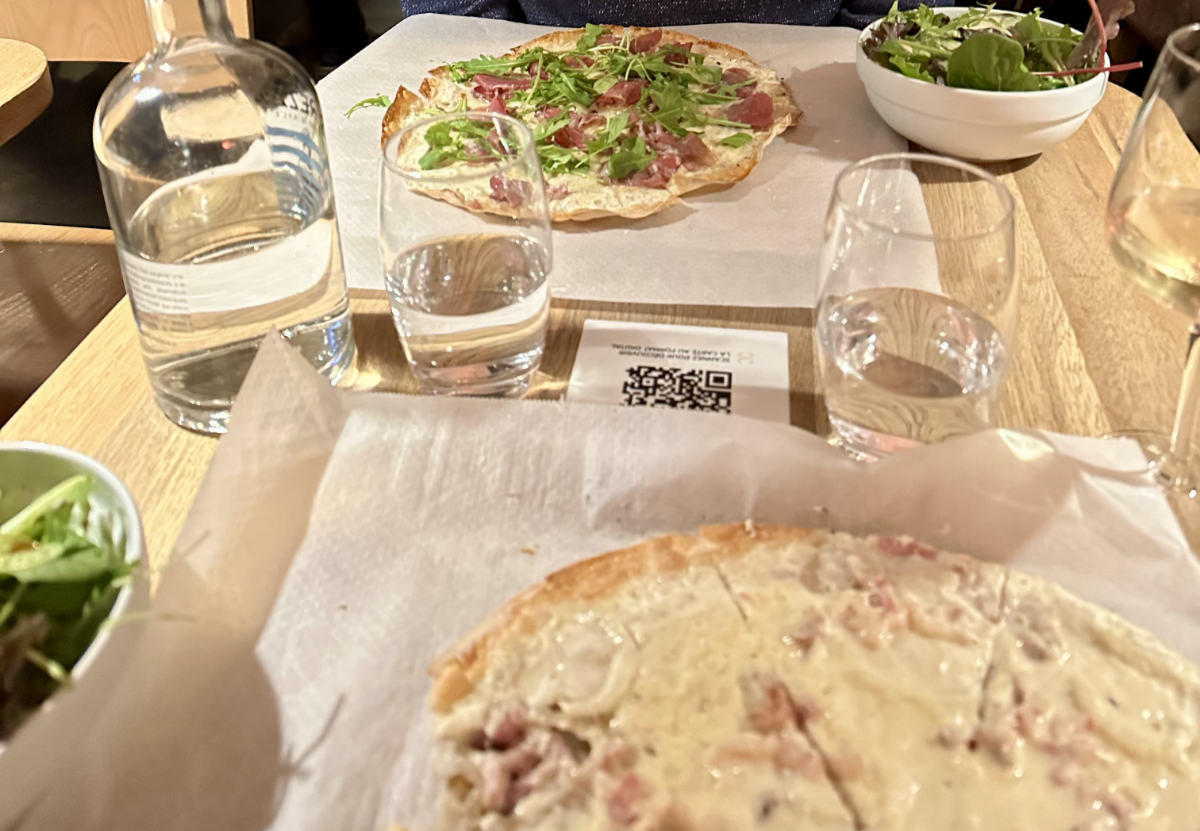
Mama Bubbele — The Tarte Flambée Experience
What: Tarte flambée restaurant with a dedicated GF option Address: Place du Corbeau, Strasbourg We ate here: Yes, and it was a highlight.
This one requires context. Mama Bubbele is not a 100% dedicated gluten-free restaurant. They serve regular tarte flambée alongside a gluten-free version. Some celiac travel bloggers warn against eating here because of potential cross-contamination in a shared kitchen.
Here’s our experience: my partner ate the gluten-free tarte flambée and had no reaction. The restaurant was busy — Mama Bubbele is popular, especially during Christmas market season — but the staff were helpful when it came to ordering the GF version. I honestly couldn’t tell you if it tasted different from a regular tarte flambée. It was good.
But I want to be transparent: if your celiac is extremely sensitive to trace amounts, you’ll need to make your own judgment call here. We felt comfortable. Other celiacs might not. That’s a fair and personal decision.
What makes it special: Tarte flambée is the Alsatian specialty. Being able to actually eat one when you’re celiac — in the city where it originated — felt like a genuine win.
L’Eden Libre de Gluten — Your Strasbourg Breakfast Spot
What: 100% gluten-free bakery Address: 15 Place du Temple Neuf, Strasbourg
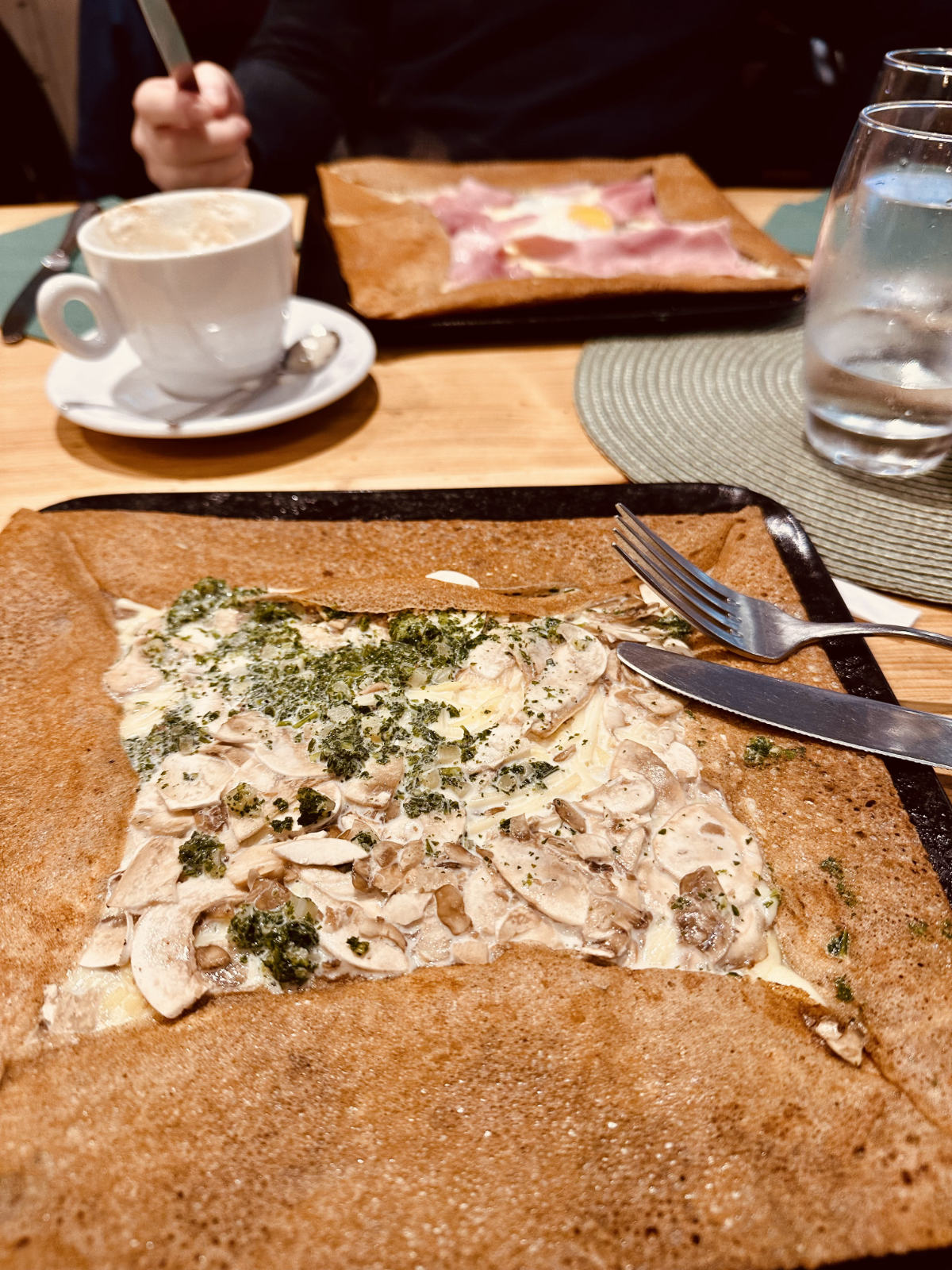
We went here twice for breakfast and it became our Strasbourg morning routine. It’s a small bakery with a few seats, a coffee machine, and a counter full of gluten-free pastries, quiches, and baked goods. The move is simple: order a coffee and pick whatever looks good in the case. Everything we tried was solid.
It’s one of the only fully dedicated GF bakeries in Strasbourg, which makes it an essential stop. You’re not navigating a mixed menu or asking questions about cross-contamination — everything behind the counter is safe.
Other Strasbourg GF Spots
| Restaurant | Type | GF Status | Our Take |
|---|---|---|---|
| Bistrot et Chocolat | Vegetarian/Café | GF options clearly marked | We ate here, but I’d only recommend it if you’re specifically craving something chocolate-focused. It’s not a great option for a full breakfast or lunch — I had a platter that was fine but nothing special. |
| Umami | Asian | GF options available | The food was okay, but the service was rough. It was insanely busy during market season and one server was trying to handle what felt like 20+ tables. Hard to fully enjoy a meal under those conditions. |
Strasbourg tip: The dedicated GF options are more limited here than in Paris. Plan your meals in advance rather than hoping to find something on the fly. We made reservations where possible, and the pre-trip research paid off the most in Strasbourg.
Colmar: The Toughest City for Celiac Travelers
Colmar was the most challenging of the three cities for gluten-free dining. The town is small, the restaurant scene is more traditional Alsatian (which leans heavily on flour-based dishes), and there are no dedicated GF bakeries or restaurants that we found.
And here’s the real problem: we couldn’t get into most of the restaurants on our list. During Christmas market season, Colmar is packed — especially on weekends — and the restaurants fill up fast. We should have booked reservations weeks in advance. We didn’t, and it cost us multiple meals.
This is probably the single biggest tip in this article: if you’re visiting Colmar during Christmas market season, make restaurant reservations as far in advance as possible. We’re talking 2-4 weeks ahead for popular spots. Don’t assume you can walk in anywhere.
How We Actually Ate in Colmar
Paul & Pia was our hotel, and we had breakfast there every morning. It wasn’t a dedicated GF breakfast — my partner stuck to what she knew was safe: eggs, sausage, bacon. Nothing fancy, but having a reliable baseline every morning takes a huge amount of pressure off the rest of the day. You’re not starting your morning stressed about finding food.
Bistrot Gourmand — We ducked in here mostly to warm up after being out in the cold all day. Had hot drinks — coffee and hot chocolate — and I grabbed a snack. It wasn’t a planned meal, more of a survival stop. Fine for what it was.
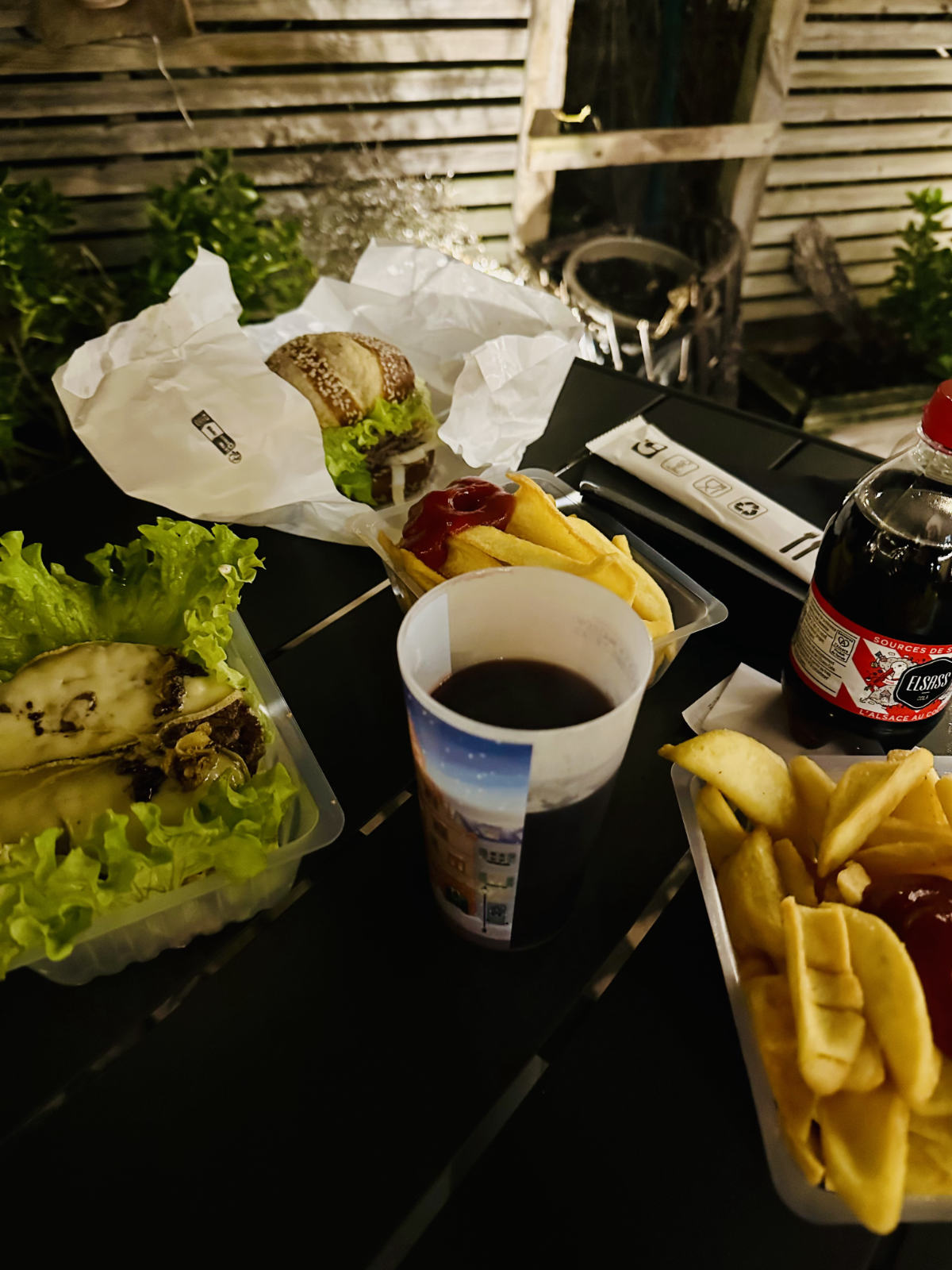
Ma Fabrique du Burger & Co (Food Truck) — This was the most unexpected meal of the trip. We found this black food truck tucked into a back alley, set up on cobblestone with an umbrella, string lights, and Christmas decorations. It looked like a scene from a movie. My partner ordered her burger on lettuce instead of a bun, and we were lucky that an American was already there eating who helped us explain to the woman running the stall why we wanted it without the bread. One of those unplanned travel moments you couldn’t script — and the burger was genuinely great.
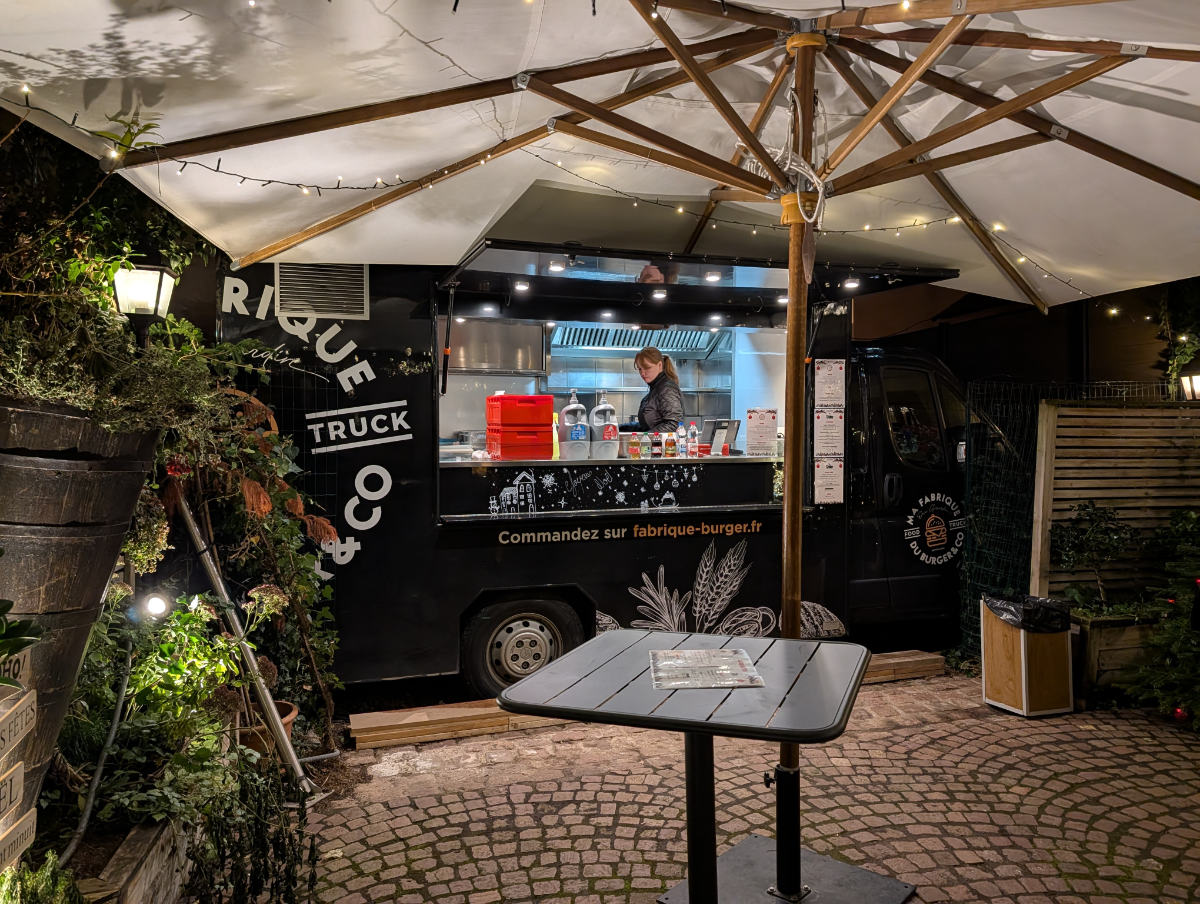
The truck is called Ma Fabrique du Burger & Co (fabrique-burger.fr), and it was set up in a small courtyard off one of the side streets near the market area. If you spot it, stop.
The Reservation Lesson
We had a researched list of Colmar restaurants — Wishtub de la Petite Venise, La Cocotte de Grand-Mère, JY’s, L’Atelier de Peintre — but couldn’t get into any of them. They were either fully booked or packed with a long wait by the time we tried.
This was the only part of the trip where the celiac planning system broke down, and it wasn’t because of the celiac — it was because of basic restaurant logistics during peak tourist season. The lesson is clear: book ahead.
Colmar tip: If you’re celiac and visiting Colmar during the markets, plan every dinner in advance. Lunch can be more flexible (places are less full midday), but dinners at any decent restaurant need a reservation during peak season. Without one, you’re relying on luck — and with celiac, luck isn’t a strategy.
Eguisheim: Eat Before You Go
We took a half-day trip to Eguisheim from Colmar. It’s a tiny village — stunning, absolutely worth visiting — but the food options for celiacs are essentially zero. The Christmas market stalls are the same situation as Colmar’s: not safe for celiac.
Our approach: We ate in Colmar before heading to Eguisheim, enjoyed the vin chaud at the market, and had dinner back in Colmar afterward. Don’t go expecting to eat there — go for the atmosphere, the photos, and the mulled wine.
Essential Tools & Phrases for Celiac Travel in France
Apps & Tech
- FindMeGlutenFree — Celiac-specific restaurant reviews. Filter by “celiac safe” not just “gluten-free options available.”
- Google Fi (or similar international data plan) — Real-time restaurant searching when plans change. This was our most important tool on the ground.
- Google Translate — The camera feature translates menus in real time. Also useful for communicating cross-contamination concerns with servers who don’t speak English. We used this constantly.
- Claude / AI research — We used Claude before the trip to compile gluten-free restaurants in each city, organized by location relative to our hotel and planned destinations. Great for building your initial shortlist.
- Google Maps — Search reviews for “celiac” or “gluten free” before entering any non-dedicated restaurant.
French Phrases That Matter
Here’s the good news: nearly every restaurant we visited had staff who spoke English, even in Strasbourg and Colmar. That said, knowing a few key French phrases makes a real difference. Staff respond more positively when you try, and for the occasional spot where English isn’t strong, these phrases cover the essentials. For anything beyond this, the Google Translate app fills the gap — we used the camera feature to translate menus and the conversation mode to communicate with servers.
| English | French | Pronunciation |
|---|---|---|
| I have celiac disease | Je suis cœliaque | “Zhuh swee say-lee-AHK” |
| I cannot eat gluten | Je ne peux pas manger de gluten | “Zhuh nuh puh pah mahn-ZHAY duh gloo-TEN” |
| Is this gluten-free? | Est-ce sans gluten ? | “Ess sahn gloo-TEN?” |
| It’s an allergy, not a preference | C’est une allergie, pas un choix | “Say toon ah-lair-ZHEE, pah un shwah” |
| No bread, no flour, no wheat | Pas de pain, pas de farine, pas de blé | “Pah duh pan, pah duh fah-REEN, pah duh blay” |
| Does the sauce contain flour? | Est-ce que la sauce contient de la farine ? | “Ess-kuh lah sohs kohn-TYEN duh lah fah-REEN?” |
| Thank you for understanding | Merci de votre compréhension | “Mair-SEE duh vot-ruh kohm-pray-ahn-SYON” |
Important note: In France, saying “allergie” (allergy) is taken more seriously than “intolérance” (intolerance). Even though celiac isn’t technically an allergy, framing it as an allergy gets better results with restaurant staff. Multiple GF travel bloggers confirm this.
Consider a Celiac Restaurant Card (Or Just Use Google Translate)
Printed or digital cards that explain celiac disease in French — including cross-contamination concerns — can be shown to waitstaff. Several versions are available online (some free, some ~$9). This eliminates the language barrier entirely and ensures nothing gets lost in translation.
We didn’t use a dedicated card — we relied on a mix of basic French phrases, English-speaking staff (which was surprisingly common even in Strasbourg and Colmar), and the Google Translate app when needed. That worked for us, but a card would have been a nice backup for the few situations where communication was trickier.
City-by-City Difficulty Rating for Celiac Travelers
| City | Celiac-Friendly Rating | Dedicated GF Restaurants | Notes |
|---|---|---|---|
| Paris | ★★★★★ Excellent | 15+ dedicated spots | Best GF city in France, possibly Europe. You’ll eat well. |
| Strasbourg | ★★★☆☆ Moderate | 2-3 dedicated spots | Requires research, but the right places exist. Mama Bubbele is a highlight. |
| Colmar | ★★☆☆☆ Tough | 0 dedicated spots | No dedicated GF restaurants we found. Fine dining handles it best. Plan ahead. |
| Eguisheim | ★☆☆☆☆ Very Hard | 0 | Eat before you go. Enjoy the vin chaud. |
What We’d Do Differently
Book restaurant reservations weeks in advance — especially in Colmar. This was our biggest mistake. During Christmas market season, popular restaurants fill up fast, and we couldn’t get into several places on our list. For celiac travelers, this is doubly frustrating because you can’t just walk into any random spot as a backup. Book 2-4 weeks ahead for dinner reservations in Colmar and Strasbourg during market season. Paris is slightly more forgiving, but still better with reservations.
Stock up on bakery items every morning. The mornings we grabbed pastries and coffee from L’Eden in Strasbourg or Noglu in Paris, we had safe snacks all day. The mornings we didn’t, we felt the gap by mid-afternoon — especially during long market walks.
Spend less time hoping market stalls would work. Once we accepted that the markets were a drinks-and-atmosphere experience rather than a food experience for my partner, we stopped trying to make it work and just enjoyed the markets for what they were.
Frequently Asked Questions
Can celiacs eat at French Christmas markets? Very little is safe. Most market food is wheat-based or prepared on shared surfaces. Drinks like vin chaud (mulled wine) and hot cider are generally safe. Some sausage stalls may work if they’re grilling on a dedicated surface, but ask first.
Is Paris good for celiac travelers? Paris is one of the best cities in Europe for celiacs. There are over a dozen dedicated 100% gluten-free restaurants and bakeries, plus strong allergen labeling in grocery stores. You will eat well.
Is it safe to eat at non-dedicated restaurants in France? It depends. Higher-end restaurants are generally more knowledgeable about cross-contamination. Use the phrase “Je suis cœliaque, c’est une allergie” and check reviews from other celiacs before eating anywhere that also serves gluten.
What’s the best app for finding gluten-free restaurants in France? FindMeGlutenFree is the gold standard for celiac-specific reviews. Supplement with Google Maps reviews filtered for “celiac” or “gluten free.”
Should I learn French phrases for celiac dining? Yes — even a few basic phrases make a noticeable difference. Staff take you more seriously, and it reduces miscommunication. Carry a celiac restaurant card as backup.
Are French grocery stores good for gluten-free? Yes. EU allergen labeling laws require gluten to be bolded in ingredient lists. Major chains like Monoprix and Carrefour have dedicated GF sections. Look for “sans gluten” on packaging.
What’s Next in This Series
This is Part 3 of our France Christmas Markets & Paris series:
- 10 Days in France for Christmas Markets: Our Complete Itinerary — The full day-by-day trip plan
- Strasbourg vs. Colmar Christmas Markets: Which Are Better? — Side-by-side market comparison
- Paris Christmas Markets: Tuileries, Notre-Dame & More — Honest reviews of every Paris market
- Montmartre Walking Tour: What to See & Why It’s Worth It — Our favorite guided experience
- Louvre & Musée d’Orsay: How to Do Both — Comparing Paris’s two best museums
Traveling to France with celiac disease? Drop a comment below with your questions — or if you’ve been and have recommendations we missed, we’d love to hear them.